Hear from the Candidates
Members will also have an opportunity to hear directly from the candidates during the QED-C Annual Business Meeting on October 14, available both in person and virtually.

QED-C members have an important role in selecting the leaders who help guide the consortium’s direction and priorities.
This year, candidates are running for two open seats on the QED-C Steering Committee, with terms beginning in January 2027. Steering Committee members provide strategic guidance to QED-C, serve as advisors to executive leadership, connect the consortium with the broader quantum community, and help ensure member perspectives are represented in QED-C’s work.
Before casting your vote, take some time to get to know the candidates. Review their backgrounds, experience, priorities, and perspectives on the opportunities and challenges facing the quantum industry.
Voting information, including eligibility, ballot instructions, and the voting deadline, will be shared with eligible member representatives. Thank you for taking part in this important member process and helping shape the next chapter of QED-C.
My engagement with QED-C predates and includes membership through Elevate Quantum, which I founded and led. We engaged heavily in QED-C meetings and in the regional innovation conversations the consortium helped convene, and I attended a number of QED-C events, including QED-C on the Hill and the QED-C meetings in New York City. My interest in serving comes from my current work. As founder of Quantum Advantage Capital, now standing up the first major US-focused quantum fund, the most direct way I can support the industry is to support the organization at its center. QED-C connects government, industry, and academia across a membership that now spans 39 countries, and it works in the interest of those members at a moment when the sector’s direction is being set. Serving on the Steering Committee is the most direct way I can contribute to that, and I would bring both an operating history on the public-private side of the industry and a current seat in capital formation to the service of the full membership.
I founded and led Elevate Quantum, the US government’s designated quantum tech hub. I am now standing up Quantum Advantage Capital, the first major US-based quantum-focused fund. The fund will provide capital, commercial expertise, and operating support across the sector: quantum computing, the enabling hardware and software beneath it, quantum sensing and its applications, and quantum-impacted areas such as cybersecurity and post-quantum cryptography. The fund is US-based, but the industry it invests in is not contained by any border. Supply chains, talent, and research collaboration run through the same international community that makes up QED-C’s membership, and the companies we back will build with partners and sell into markets around the world. That gives us a direct and vested interest in the continued momentum and commercial success of the industry as a whole. It also means we spend our time on the questions QED-C exists to work through: where the technology is genuinely ready, where the gaps in workforce, supply chain, and standards sit, and what it will take to convert scientific progress into commercial value for the members building it.
I hope to bring a set of experiences, skills, and networks that QED-C can put to direct use. As founder of Elevate Quantum, I stood up an organization that navigated a public-private partnership structured as a 501(c)(3). That meant building tax, accounting, governance, and legal functions from scratch, and working through business models, membership structures, and the full suite of decisions that come with sitting between government, industry, and academia. These are the same questions QED-C faces as it navigates its role at the center of the industry, and my experience with them is recent and practical. My background is in science commercialization and company creation. I founded an organization that went on to create more than ninety science-oriented companies, with the portfolio ultimately raising billions of dollars. And as we stand up a venture fund, I bring an investor’s perspective on where capital is moving in quantum and what the market will support. The combination of nonprofit governance experience, company creation at scale, and capital formation is unusual, and I believe it makes me a good fit to assess options, offer perspective, and support the consortium’s work on behalf of its full membership.
The vision for the industry and QED-C across these horizons is easiest articulated from an end-state. The ten-year industry goal sets the target, and the five-year and one-year plans are backed out of it. QED-C should continue to be the body that codifies this vision and keeps its international membership aligned, credible, and moving. In ten years, the quantum industry should stand on a settled foundation, delivering commercial value in the hundreds of billions of dollars. Quantum sensing should be built into datacom architectures at global scale, and post-quantum cryptography should be in place, both in quantum-resilient protocols and in the agile architectures that let the industry keep adapting. Five years out, this vision requires a scientifically useful computer as the baseline and, more ambitiously, a commercially useful one with clear applications worth hundreds of billions of dollars. Sensing should be deployed across US and allied national security infrastructure, with the scalability to reach wider datacom, and post-quantum cryptography should cover national and critical infrastructure. That makes the next year about policy: clear, coordinated strategies across these domains and the countries QED-C members call home, with the buy-in and investment to execute them on the five-year clock.
First, maintain QED-C’s role as the standard bearer for the quantum industry: a public-private consortium rooted in the US with members across 39 countries, projecting a compelling vision, strategy, and engagement plan to the world. It should remain the organization that governments, companies, and international partners look to for an authoritative read on the sector, and it should do that work squarely in the interest of its members, who are central to its strategic plan. The next several years, as the industry crosses from science into commercial value, are when this matters most. Second, fully implement a strategy for financial self-sustainability built around that core role. The consortium should control its own destiny. A durable funding base, built with and for the membership rather than around any single program or appropriation, is what lets QED-C set its own agenda and execute for its members over the long term without its priorities bending to short-term funding cycles. The key word is implement. A plan on paper is not the goal; a funded, operating model is.
As a confounding member, I currently serve as the Chair of the Commercialization & Use Cases TAC, and would be willing to serve on the steering committee after the many years I have witnessed the many great changes of QED-C to guide the next phase.
Quantum mechanical simulations of chemistry for industrial process improvements.
Critical thinking, solutions driven, and always willing to speak up to identify learning points to pivot.
Over the next 5 years, as the voice of the Quantum industry, I’d encourage more workshops and use case opportunities for engagement.
Fundraising opportunities and industry collaboration.

My engagement with QED-C has grown through my work at Infleqtion over the past three years. I have helped determine where Infleqtion can support QED-C’s work and now serve as one of our company’s primary QED-C contacts. I was Infleqtion’s onsite lead at the QED-C legislative event in Washington, DC. Watching companies come together to showcase quantum to legislators reinforced what QED-C makes possible that no single company can do alone. Infleqtion has strong roots in QED-C starting with our founder Dana Anderson, who was an early QED-C leader. We have been looking for the right opportunities to build on that history by contributing more expertise and senior leadership time to QED-C. I want to serve because I believe companies can achieve more for the industry by working together. I would bring my experience and Infleqtion’s expertise and resources to work that benefits the whole membership, across technology approaches and stages of growth.
Infleqtion develops atom-based quantum computing systems and quantum sensing technologies, including timing. We also develop software to help people use those capabilities. Our focus is on problems important to national and economic security. I lead operations and strategic communications at Infleqtion. My interest spans both building quantum systems and helping people understand them. Building those systems requires quantum-enabling technologies such as lasers, photonics and precision components. Our progress depends on a specialized supplier base that needs to grow alongside us, and that is an industry-wide challenge QED-C is well positioned to address. How we position quantum to the world matters. I want more people across the technology community to see what is exciting about quantum and where their expertise can contribute. Enterprises, policymakers and the public need clear explanations of its potential, evidence of progress and an understanding of the work still ahead. Communicating that well can build the interest and confidence the industry needs as it develops.
My experience spans business operations, ecosystem development and strategy at Intel, Semtech and Infleqtion. Building trust among partners and communicating complex change have been central to that work. At Intel, I worked with OEMs, suppliers and industry partners to bring new technologies to market. Across my career, I have worked with alliances including the WiMAX Forum, Wi-Fi Alliance, Digital Home Working Group, DLNA and LoRa Alliance. I served as chief of staff and special assistant to Andy Grove and later led Intel’s global supply chain transformation for the transition to heterogeneous chiplet architectures. I have also worked with CEOs and boards through acquisition integration and the transition to a public company. As QED-C considers a transition to an independent organization, I would bring practical experience helping leadership teams strengthen governance, set operating priorities and align budgets with strategy. I would help assess the operating model and membership decisions needed to sustain QED-C and deliver value to its members. Those experiences taught me how to translate strategy into decisions and work across competing priorities. On the Steering Committee, I would listen to members with different needs, help identify common ground and connect shared priorities with the people and resources needed to advance them. I would also bring experience explaining complex technology and building support for emerging industries.
Over the next year, I would like to build on QED-C’s work bringing the industry together and engaging government. Quantum technologies and applications are at different stages of development. QED-C can help enterprises understand where each stands and how to engage, while keeping quantum high on the government’s agenda. Within five years, I would like to see a more capable supplier base, a skilled workforce, useful standards and sustained public investment. As capabilities are demonstrated, QED-C can help members work through shared challenges, from benchmarking to early adoption, so the industry is ready to scale when the technology is. I would also like QED-C to have a sustainable financial model, with members able to see how its work helps them find partners, address shared problems and reach potential customers. In ten years, I would like quantum technologies to be delivering clear economic and national security benefits, with sensing applications, including timing, in wide use and quantum computing delivering increasing practical value. For QED-C, success would mean the industry looks back and sees that members built the supply chain, standards and trust together that no company could have built alone.
First, build understanding and excitement for quantum through a focused series of application briefings and demonstrations for enterprises and the broader technology community. Working with QED-C’s members and Technical Advisory Committees, I would help select a few application areas and bring technologists and potential users together. Each session should explain what is ready today, what remains to be demonstrated and how participants can contribute. I would support follow-up with participants to assess whether the sessions led to useful connections, contributions of expertise or informed decisions about evaluations appropriate to the technology’s readiness. Second, help members advance a focused set of shared priorities in funding, policy and standards. Working with the TACs and QED-C staff, I would identify where additional industry coordination or resources could move existing efforts forward. Supply chain is one example: bringing suppliers and system developers together can clarify requirements and help suppliers plan for future needs. I would look for progress such as shared recommendations informing funding programs, regulatory questions resolved or useful standards advanced.
We are a quantum-first federal government contracting company, focused in all areas of quantum technology.
I have experience in many separate technical capacities that give me a unique perspective on the industry. I have been an academic, at a large enterprise (Dell), and am now at a startup, and I work to bring to my team a unique blend of what I have learned from each of these organizations to help us be successful. Also in all of these capacities, I have also served as an evangelist, promoting quantum technology on panels, at conferences, in meetings, and through white papers and academic publications.
For QED-C in particular I think the unique role it plays that should be nurtured is the workforce development capacity. It is a unique role that we serve which is not well suited to any other players in the quantum space. With this responsibility also comes a degree of thought leadership, with which we can help shape the development of the quantum domain. This dovetails with the proprietary reports QED-C publishes for its members, and can help inform the direction and thesis of future reporting. Beyond the consortium, I believe the industry has two main challenges: communication and scaling. Scaling is a well understood problem, and is one of engineering. We can learn a lot from how past technologies went through this phase, including the consolidation of competing standards. Evangelization is unique in that we follow in the wake of AI, but rather than compete for oxygen, I think it will benefit us to look for ways to collaborate with our colleagues in that domain.
One is to connect disparate organizations that share a common goal without realizing it (for example, university organizations that are developing nascent quantum programs). The duplication of effort potential is high and if we can help practitioners avoid that, we can move towards solving problems more quickly.
Secondly, I think we can promote the understanding of quantum as being made up of disparate domains (something not well understood outside of experts, who think it is only computing), but also help build connective tissue between these subdomains – for example promoting standards or ideas around the ingestion of quantum data from a sensing device into a QPU for analysis.
I first engaged with QED-C in ~2019, and my involvement deepened as I built out Sandia’s quantum business development program and connected our national initiatives to QED-C’s broader mission. From 2023 to 2024, I served as Vice Chair/Chair of the Workforce Technical Advisory Committee, providing leadership for the TAC to help broaden knowledge of the U.S. quantum workforce, gaps, trends, and pathways to get engaged. I’ve co-authored multiple QED-C workforce publications and worked closely with staff and members across QED-C programming over the years. In 2025, I was honored to be given the QED-C Carl Williams Award, acknowledging my dedication and leadership for shaping national workforce strategy and strengthening multi-sector collaboration. Having spent years building trust across this community as a volunteer, I’d like to formalize that commitment by serving on the Steering Committee, where I can help guide QED-C’s strategic direction as it scales alongside a rapidly maturing quantum industry.
IonQ is the leading quantum platform company, and following our recent acquisition of SkyWater Technology, we are now the only vertically integrated, full-stack quantum company, spanning chip fabrication and advanced packaging through quantum computing, networking, sensing, and security. That breadth gives IonQ a stake in nearly every QED-C TAC: we’re pushing the art of the possible on applications and use cases; we have a core stake in topics of interest to the enabling technologies and domestic supply chain community; we’re active in law and policy discussions around export controls and national security applications; we’re both a major supporter of and consumer of the quantum workforce pipeline; and we’re motivated to help define the metrics the industry needs to accelerate QIST commercialization. IonQ’s interests track closely with QED-C’s full mandate, which is part of why I believe I can bring a genuinely cross-cutting member perspective to the Steering Committee.
I’ve spent nearly a decade fully immersed in the quantum ecosystem, focused specifically on partnership building, coalition leadership, and translating research into funded, executable programs. I’ve helped secure or influence several high visibility competitive federal and state investments — including the Quantum Systems Accelerator, the Elevate Quantum Tech Hub, and New Mexico’s state quantum initiatives — and built and led coalitions of hundreds of organizations spanning national labs, universities, startups, state government, and Fortune 500 companies. My QED-C-specific experience gives me firsthand knowledge of how QED-C’s committees function and where they have the most impact. I bring a broad, trusted network across national labs, academia, and industry, and a track record of aligning technical experts, sponsors, and organizations with very different missions around shared goals — exactly what the Steering Committee needs as QED-C’s membership broadens and competition from quantum initiatives worldwide keeps increasing.
Next year, I want QED-C to broaden participation across its full membership — industry, national labs, and academia alike — so the consortium reflects the full breadth of who’s actually doing this work. Within five years, as more quantum consortia and initiatives stand up around the world, I see QED-C’s job as staying the highest-impact convener: continuing to produce the reports, workforce pipelines, and coordination that member organizations actually use, rather than just adding another voice to a crowded field. Within ten years, I want QED-C to still be the trusted hub — for international, federal and state sponsors, and for a membership spanning industry, labs, and academia — that keeps U.S. quantum efforts coordinated and globally competitive.
Broaden how QED-C engages its full membership across the globe — especially small and regional companies, like those I’ve worked with through Elevate Quantum and Quantum New Mexico — so Steering Committee priorities and public reports reflect the whole ecosystem. Becoming the connector for the US and our partners and allies is a critical role for QED-C to play moving forward. 2) Keep pushing QED-C’s ecosystem-building, workforce, supply chain, and commercialization alike — building on programs that can leverage the collective knowledge of all QED-C members and provide value for its membership that they can’t get from any other organization.
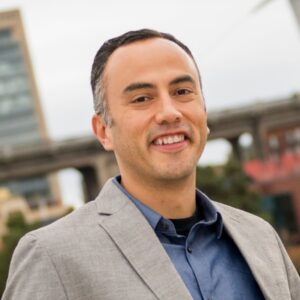
I am currently engaged with QED-C as a Qolab employee, where I am Head of Strategic Partnerships and a Quantum Hardware Engineer. Over the past year, I attended and participated in the QED-C January workshop on Advancing QC towards Practical Applications through Government-Industry Engagement. At that event, I presented on potential public-private partnerships (PPP) models, drawing on learned lessons from successful microelectronics PPP research programs such as the $300M SRC-DARPA JUMP 2.0 Program which I previously directed at the Semiconductor Research Corporation (SRC). I also participated in the QED-C April Summit in D.C., and I am an active member of the Emerging Technologies TAB. Previously as an Intel Quantum Computing Researcher, I participated in some of the earliest foundational QED-C in-person events that were held in Boulder, Co in 2018 and 2019. I am interested in serving on the Steering Committee because I believe a small collaborative QC company such as Qolab is critical to the mission of the QED-C to represent the global quantum industry with a collective voice. Furthermore, Qolab’s mission to drive semiconductor collaboration for a commercially viable, utility-scale quantum computer aligns synergistically with QED-C’s goals, creating mutual opportunities to accelerate our shared vision.
Our CTO and co-founder, John Martinis, was awarded the Nobel Prize for Physics for the discovery of macroscopic quantum mechanical tunnelling and energy quantisation in an electric circuit, a breakthrough that laid the foundation for modern superconducting quantum computers. Today these initial efforts have evolved and led to our company, Qolab. We care deeply about QIST and in quantum-enabling technologies and view bridging the gap between scientific proof-of-concept and commercial utility as the field’s ultimate engineering milestone. Qolab is leveraging the entire semiconductor industry to accelerate quantum manufacturing, and I believe QED-C can help do the same. This will not only help accelerate quantum technologies but also help secure our supply chain by establishing critical manufacturing in America. Qolab aims to replace outdated, manual laboratory processes with standard semiconductor manufacturing to finally achieve the high-yield, million-qubit scaling required for FTQC. I am passionate about laying the foundation for scalable qubit manufacturing across all qubit modalities and also of tackling the IO bottlenecks that exist. Qolab is trying to not only scale and commercialize but also grow and mature the QIST ecosystem and grow the workforce by inspiring the young minds of today that will be the quantum leaders of tomorrow.
My experience as the SRC JUMP 2.0 Director where I represented the interests of 14 semiconductor companies and DARPA to further microelectronic research make me a good fit for a position on the steering committee. As an Intel Quantum Computing Researcher, I gained the deep hands-on experience of scaling superconducting qubit fabrication from having no superconducting or Josephson Junction fabrication baseline to leading a team of engineers to fabricate a 49-qubit superconducting chip with flip-chip packaging. In this role, I also saw first-hand the challenges that exist in scaling solid-state qubits further without serious considerations addressing the IO bottleneck, power, reliability, and cost. During these years as an Intel QC Researcher, I also worked on automating measurements for spin-qubit devices fabricated on 300mm wafers. That experience gave me an insight to the challenges that exist in scaling a different technology, including also the IO bottleneck, but also the cryogenic measurement bottleneck and addressing the sources of noise from materials at the bottom of the stack and the control electronics that are used to characterize, calibrate, and control the qubits. Of course many of these challenges are similar across multiple qubit modalities and are best tackled in a collaborative manner
Nearly a decade ago, John Preskill coined the term NISQ as the community worked to take advantage of larger physical qubit counts that suffered from substantial noise while also trying to accelerate towards FTQC. We’ve made progress, but have realized it will be a longer-term effort. At the same time, we have begun to realize that we are much closer to Scientifically-Relevant Quantum Computing (SRQC), where systems use active error correction to run mid-scale algorithms that solve real-world problems in nuclear physics, chemistry, and materials science. There is tremendous excitement for this push towards SRQC. My vision for QED-C is to accelerate SRQC by removing bottlenecks, for all qubit modalities, towards achieving early logical qubit counts (10 – 100 error-corrected qubits). The QC stack has challenges that span from materials, devices, circuits, and IO to control electronics; addressing these bottlenecks by highlighting key challenges, attracting government resources to help tackle them, and resolving them through collaboration should be the focus of QED-C for the next 1-5 years. Beyond the QC stack, SRQC and FTQC will need to be horizontally integrated with HPC, and I believe this should be the focus out to 10 years, although the groundwork needs to begin today.
I believe that QED-C can play an essential role towards SRQC and FTQC by pinpointing the most pressing technology obstacles for each qubit modality, highlighting them to key government and industry stakeholders, and helping bring in additional resources to accelerate solving those obstacles. Specifically, I have a goal to see QED-C update its Quantum Technology Manufacturing Roadmap (QTMR) across all qubit modalities, publish that to the benefit of the entire quantum industry, and leverage it to attract government dollars and resources which accelerate industry towards SRQC and FTQC. The semiconductor industry also needs to increase its participation in the Quantum Ecosystem as this would be a great accelerator for the entire QC community. Qolab effectively partners across the semiconductor industry to accelerate its own roadmap, and one of my goals would be to recruit Qolab’s existing partners and investors to take a heavier role in the QED-C. I am also passionate about workforce development (WFD). As previous SRC-DARPA JUMP 2.0 Director, I am proud of the statistic that over 20% of Semiconductor PhDs in industry come from SRC-funded projects; I believe there is opportunity for QED-C to have a similar level of impact for the QC ecosystem and industry.
Members will also have an opportunity to hear directly from the candidates during the QED-C Annual Business Meeting on October 14, available both in person and virtually.
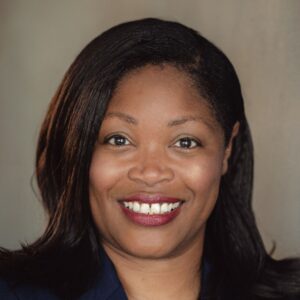
I have been a member of the Q4NS TAC for four years and have been an active participant. I am ready to expand my involvement.
As a member of one of the founding entities for QED-C, I want to continue and expand MITRE’s involvement with the organization.
I currently work as a Quantum Technologist within MITRE and am very well versed in both the platforms and modalities of QIS. Additionally, I focus on the supply chain, manufacturing and workforce development of the quantum ecosystem.
My vision for the QED-C is for the organization to be seen as a critical partner and the first choice for quantum truth and collaboration locally within the next 5 years and globally within the next 10 years.
One goal during my tenure would be increase membership and member participation through targeted engagements with other corporate entities not yet affiliated with the QED-C.
A second goal would be to engage more with states for increased recognition and partnership to strengthen QED-C reach to generate greater pathways for workforce participation within the US quantum ecosphere.
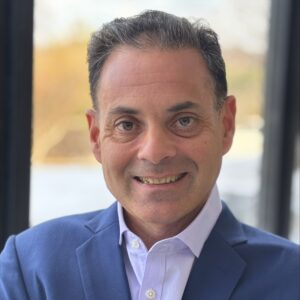
I learnt about QED-C through Joe Broz and was part of the US delegation that traveled to Australia in 2026. In my current role as IBM’s Head of Quantum for Asia Pacific and Japan, I am interested in serving on the Steering Committee for two reasons – 1. help advance QED-C’s partnership with quantum communities in Asia Pacific region (Japan, S Korea, Australia, Singapore, India, and others) where I have existing relationships, 2) to help accelerate commercialization of quantum by collaborating with QED-C members and leadership.
I work for IBM Quantum. We have developed over 90 quantum systems and our mission is to provide useful quantum computing to the world. I work with both governments and industry clients advising them on how to develop their quantum initiatives.
Qualifications and Skills – Senior IBM Quantum Ambassador; Head of IBM Quantum for Asia Pacific and Japan; Teach the Quantum Opportunity Sprint at University of Sydney; Technology Committee Member of AmCham (American Chamber of Commerce) Singapore; Frequent speaker at industry conferences (Quantum Korea, Quantum Taiwan, government workshops in Malaysia, Indonesia, Philippines, New Zealand). My background will allow me to evangelize QED-C globally and help develop a quantum community across borders.
My vision for the quantum industry is to take quantum from theory to practical application and commercialization at scale. Over the next year, I want to see demonstrated examples of quantum advantage in chemistry, materials science and optimization. Over the next five years, I hope to see multiple quantum companies deliver large scale error corrected quantum systems. And over ten years, I hope to see quantum tackle complex problems in climate change, health pandemics, logistics and supply chain optimization, financial modeling and more. I want to see quantum delivering economic value across many industries to make our world a better place to live in.
Position QED-C as the global leader in bringing the quantum community together for the greater good
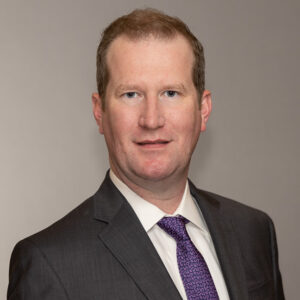
Northrop Grumman develops quantum technologies for aerospace, defense, and commercial applications. NGC is active in quantum sensing, including magnetometers, clocks, and gyroscopes for remote sensing and GPS-denied navigation; NGC also actively pursues superconducting technologies for ultra-efficient classical and quantum computing.
I would bring more than 15 years of experience spanning quantum-device research, superconducting hardware development, systems architecture, and senior technical leadership, together with a record of translating emerging technologies into executable roadmaps, successful programs, and sustained organizational growth. During my 13-plus years at NGC, I have had the opportunity to lead multidisciplinary technical teams, helped shape numerous successful proposals, built consensus across diverse stakeholders, mentored future leaders, and communicated complex technical issues candidly to executives, customers, government representatives, and research partners. I have broad-based experience working with partners spanning the government, academic, and commercial realms, and have served as the primary point of contact between NGC and the quantum center at Virginia Tech’s northern Virginia campus since inception. On the Steering Committee, I would apply this combination of technical depth, strategic judgment, and collaborative leadership to help QED-C anticipate the quantum economy’s transition from research to scalable application; strengthen connections among industry, universities, and government; convert members’ collective expertise into credible, accessible insights; and focus the consortium’s efforts on measurable value for its members. These capabilities align closely with QED-C’s goals to engage and empower its community, serve as the trusted voice of the quantum ecosystem, and become an increasingly effective bridge between academic, industry, and government stakeholders.
1 year objectives: Establish a technology-neutral industry scorecard in association with standards bodies including IEEE; strengthen member collaboration via use-case and algorithm repositories while respecting individual organization IP 5 year objectives: Be the authoritative source for independent quantum-industry data, forecasts, use cases, and adoption guidance; support a resilient domestic and allied supply base, stronger workforce pipelines, and practical pathways for small companies to access facilities, expertise, and customers; develop more stable customer markets, clearer procurement pathways, and financially durable business models 10 year objectives: Serve as the long-term coordinating institution and trusted source of evidence for the global quantum economy; maintain strategic foresight across computing, sensing, communications, security, workforce, supply chains, and international competition
My primary goal for QED-C is to enable productive collaborations between large and small businesses, government, and academia. No individual organization has all the answers with respect to developing and deploying quantum technology at scale; QED-C should have a central role in enabling and fostering those relationships.